
SI Joint Pain
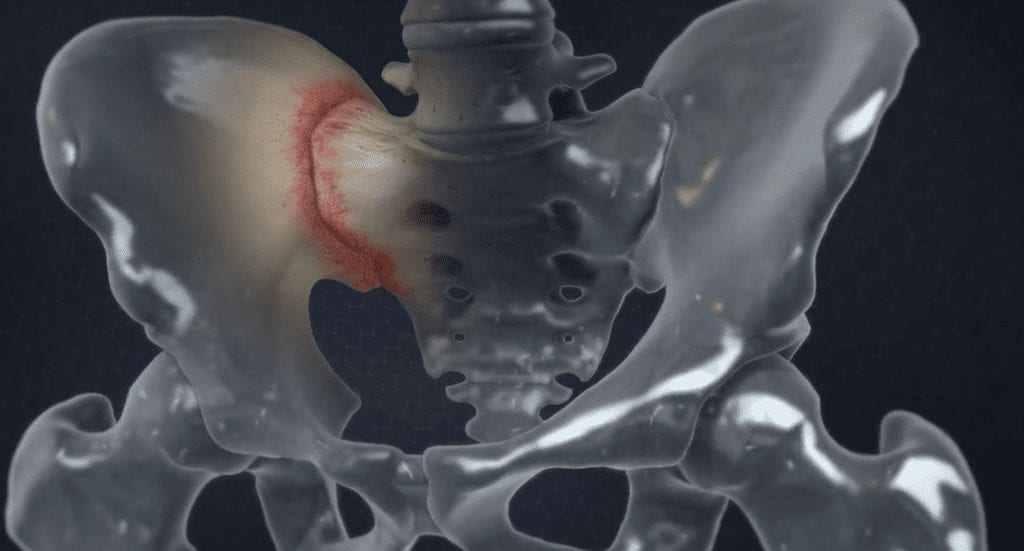
What Are the SI Joints?
The sacroiliac (SI) joints are located at the site where the sacrum connects to the right and left iliac bones, just below the lumbar spine. The iliac bones make up the pelvis, and the SI joints connect it to the spine. Needless to stay, the SI joints play an important role in not only connecting the upper and lower hemispheres of the body but also providing the structure required to facilitate smooth movement. While the SI joints are largely stationary, rarely transitioning more than four degrees, they do support the full weight of the upper body, so their sturdiness is greatly appreciated. When the daily stress of supporting the body’s weight begins to take its toll on the SI Joints, it can lead to worn down cartilage and the onset of arthritis.
What Is Si Joint Pain?
Individuals suffering from SI joint pain typically experience it in the lower back and buttocks. Oftentimes, SI joint pain is misdiagnosed as a herniated disc or other degenerative spine conditions; however, the cause of SI joint pain is in no way related to the intervertebral discs of the spine. Rather, SI joint pain is caused by the degeneration of cartilage in the SI joints. The importance of cartilage is two-fold. It facilitates movement and serves as a shock absorber to keep the bones from damaging one another or coming into contact. When the cartilage is rendered incapable of performing its job, it will eventually lead to osteoarthritis.
What are the Symptoms?
While every patient will experience varying degrees of SI Joint pain symptoms, there are several key symptoms that can be used to identify a patient suffering from SI joint pain. These include joint redness or swelling, joint tenderness, and radiating warmth. While moving, patients often find themselves limping or becoming stiff, resulting in a loss of range of motion, especially when scaling a sloped surface. A similar sensation may occur while lying on the affected side. The joint may also lock up or pop audibly. Any of the above symptoms can also jeopardize the strength of the SI joint, causing the patient to feel weakness in their lower back or buttocks.
Some patients describe their symptoms as a “subtle” ache that resembles sciatica. Others would choose words like “radiating” or “pulsing” to describe pain in their groin or thigh. However you choose to describe your symptoms, you’ll want to try to be as accurate as possible when discussing treatment options with your medical provider. Depending on the severity of your SI joint pain, the underlying cause of your condition, and a litany of other factors, your orthopedic surgeon will tailor a treatment that best suits your particular needs.
What are the Causes?
There are numerous potential causes of SI joint pain. Arguably, the most common cause is aging. There’s no escaping the wear and tear of life, and attempts to mitigate the onset of SI joint pain may be largely futile. Living a responsible and active lifestyle is recommended, as a sedentary lifestyle can actually increase an individual’s susceptibility. While natural degeneration is the root of many Americans’ SI joint pain, it’s far from the only one. Individuals suffering from any of the following conditions are also at an increased risk of SI joint pain:
- People with degenerative sacroiliitis or axial spondyloarthritis
- Women who have been pregnant in the past
- Individuals who have undergone lumbar fusion surgery or a laminectomy in the past
- Anyone with an uneven pelvis or legs
- Those who have been injured in a falling, twisting, or lifting accident
How is it Treated?
Treatment for SI joint pain begins with a diagnosis. Consult your medical provider to discuss evaluation options. When describing your symptoms, use as much detail as possible. When did you start to experience pain? Where do you feel pain? Do you have problems sleeping, sitting, or standing? These questions and many more will help your medical provider unearth the truth about your pain. In some cases, a simple physical exam can provide some clues as to the root of a patient’s symptoms, but some form of imaging study will be required to truly understand the full extent of the condition. Whether an x-ray, CT, or MRI is used, the next step is the acknowledgement of the condition and a discussion about treatment options.
Many patients find success with conservative treatment methods, such as physical therapy, chiropractic adjustments, stretching, and anti-inflammatory medications. These treatments are intended to reduce the severity of symptoms and provide relief to the patient. When they are unable to do so, many patients will utilize joint injections to provide superior pain relief. Steroid injections are effective at reducing swelling and pain for months at a time, but they can only be administered three times a year. Another treatment option is nerve ablation, which utilizes electrical currents to break down nerve fibers relaying pain signals to the SI joint.
If none of these treatment options provide a patient with the solution they are looking for, they can consult an orthopedic surgeon to undergo surgery. One such surgery is SI joint fusion surgery. This minimally invasive surgical option has grown in popularity thanks to its small incisions and quick turnaround. Using a single, small incision, an orthopedic surgeon can implant titanium fasteners to steady the SI joint. A graft material is also fixed to the joint, allowing new bone to grow and restore strength to the joint. The entire procedure can be performed in as little as an hour in an outpatient setting. As soon as surgery is complete, the patient is allowed to return home. Of course, any patient who wishes to stay hospitalized over night has the option with a doctor’s approval. Patients must be careful to avoid re-aggravating the surgical site during the first several weeks of recovery. However, once a patient has made a full recovery, they can return to normal activity without any significant lifestyle adjustments.
Contact Florida Surgery Consultants
If you believe you have symptoms of SI Joint Pain, contact Florida Surgery Consultants. We are a group of spine surgeons based out of Tampa, Florida. We can perform minimally invasive spine procedures for SI Joint Pain with fast recovery times. At Florida Surgery Consultants, we have some of the top rated spine surgeons in Florida. Listed below is the Spine Surgeons in Florida that perform surgeries for SI Joint Pain:
Share on facebook
Share on google
Share on twitter
Share on linkedin
Schedule a Consultation Today
What type of conditions do our Board Certified Spine Surgeons Treat?
Our Spine Surgeon Team

Dr. Jonathan Hall, MD
Board Certified Neurosurgeon Minimally Invasive Spine Surgery