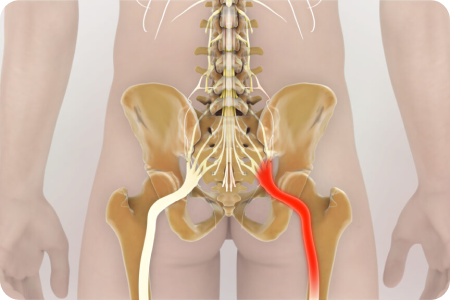
The majority of back pain is a biological and chemical problem associated with annular tears in spinal discs.
The DISCSEEL Procedure
The DISCSEEL Procedure treats these conditions
- Annular Tears
- Bulging Discs
- Herniated Disc
- Degenerative Disc Disease
- Spinal Stenosis
- Sciatica
- Chronic Lower Back Pain
- Failed Spinal Surgery
- Abrupt Injury
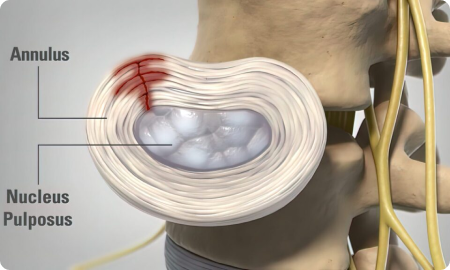
Annular Tears
Lower back problems including degenerative disc disease, herniated disc (also called slipped, ruptured, or bulging disc), sciatica, and others are the result of annular tears.
Does your pain move around? Meaning sometimes you feel it on the left, then on the right, or in the center of your lower back. You could have multiple tears in different discs.
How to Treat Annular Tears?
Annular tears and fissures can’t repair themselves. When left untreated, they could progress to other conditions like a herniated disc, bulging disc, or ruptured disc. Traditional back surgery and suturing (stitches) cannot repair a tear.
The solution is to SEAL the annular tears. This is precisely what the DISCSEEL Procedure does.
After treating thousands of patients for whom other therapies had failed, Dr. Kevin Pauza pioneered the DISCSEEL Procedure. This all-natural approach to healing annular tears utilizes Fibrin, an FDA-approved biologic, to repair annular tears and promote the healing and growth of healthy tissue.
Degenerative Disc Disease
What Causes Degenerative Disc Disease?
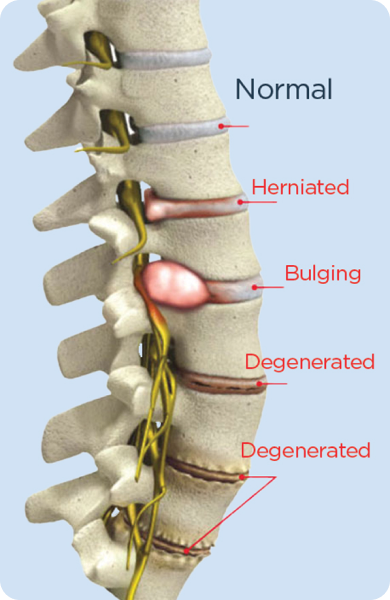
It is a normal part of our aging process to develop degenerative spinal discs. However, this condition goes unnoticed in some people, it causes painful and debilitating symptoms in others that can affect their quality of life. There are also a variety of symptoms associated with this condition because the spine is surrounded by nerves that serve various parts of the body. This is why degenerative disc pain is not only felt in the back but can also cause headaches, arm, and leg pain, depending on where the damaged discs are located.
How to Treat Degenerative Disc Disease?
Treatment for chronic back pain varies depending on its cause. Conservative treatments include physical therapy, pain management medications, and lifestyle changes like exercise or posture correction. In cases where these options don’t provide relief, minimally invasive procedures such as the DISCSEEL® Procedure
Chronic Lower Back Pain
What Causes Chronic Back Pain?
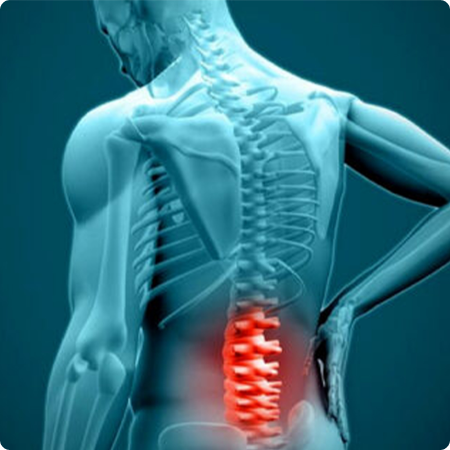
Chronic back pain is often caused by a range of factors, including degenerative disc disease, herniated discs, spinal stenosis, muscle strain. Over time, the discs in the spine can weaken, leading to tears, bulging, or compression of nearby nerves, resulting in persistent pain. Injury, poor posture, and repetitive stress on the spine also contribute to the development of chronic pain. In some cases, pain can persist even after the original injury heals, becoming a long-term condition that affects daily life.
How to Treat Chronic Back Pain?
Treatment for chronic back pain varies depending on its cause. Conservative treatments include physical therapy, pain management medications, and lifestyle changes like exercise or posture correction. In cases where these options don’t provide relief, minimally invasive procedures such as the DISCSEEL® Procedure
Sciatica
The sciatic nerve runs down the back of the buttocks, leg, and foot. It’s the merger of the 3 bottom nerve roots (L4, L5, and S1). It’s also important to know that pinched nerves don’t cause sciatica pain. This pain is actually caused by inflammation of the nerve roots as a result of leaky discs. Inflammation occurs because the nucleus pulposus is perceived as a foreign substance by the human body when it leaks through annular tears and onto nerve roots. The leaked gel, like all foreign substances, causes inflammation that attacks nerve roots. It beats and damages nerves so much that it is referred to as “Battered Root Syndrome” by many scientific papers.
What Causes Sciatic Pain?
Unlike what most people have been led to believe, sciatica is often not caused by a physically pinched nerve, but by irritation of the sciatic nerve root caused by nucleus pulposus gel leaking out of the spinal disc.
Sciatica can be a debilitating indication, but it is usually secondary to other issues. These could be many different reasons, but the main issues that lead to sciatic pain include a lumbar herniated disc, degenerative disc disease, lumbar spinal stenosis, isthmus spondylolisthesis, piriformis syndrome, and sacroiliac joint dysfunction. Other causes such as pregnancy, tumor, or infection are less common. If left untreated, whatever is causing this condition can worsen, leading to complications that can become even more serious.