
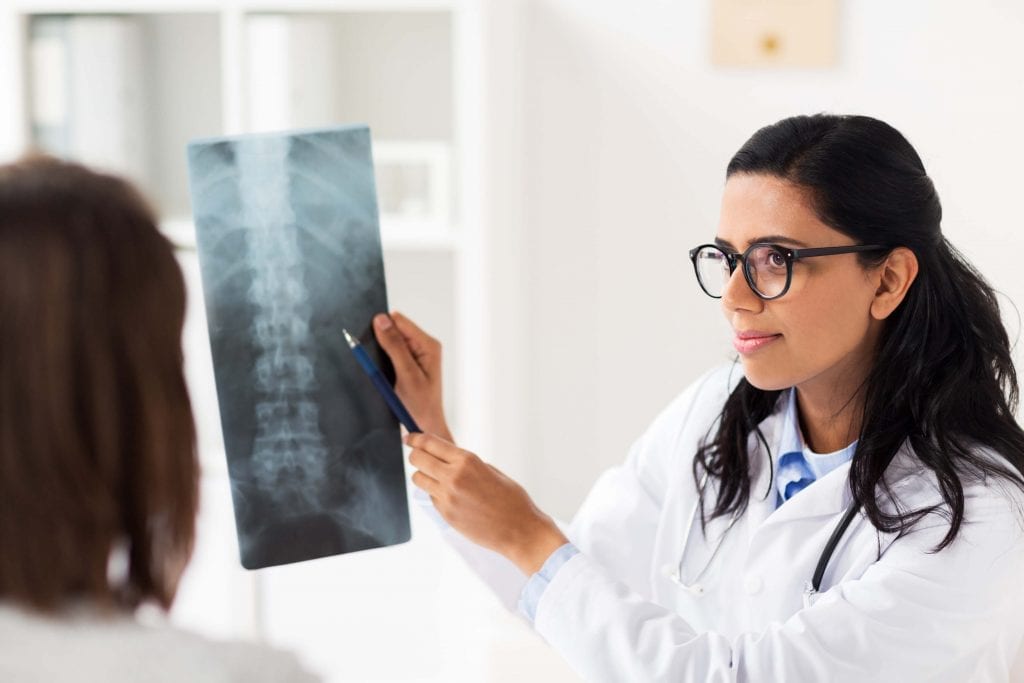
A cervical annular tear is a small tear located in the cervical region of the spine (neck). There are many things that can cause this including trauma such as whiplash or the natural deterioration of the spine. Many of the symptoms do not appear and many people do not know that they have an annular tear. Usually these tears can heal on their own, sometimes these tears can also cause disc issues.
Understanding when you should go see a doctor is important. The first step is to get an MRI in order for the spine surgeon to determine if you have a cervical annular tear or not.
Types of Annular Tears by location:
- Cervical Annular Tears (C1-C7)
- Thoracic Annular Tears (T1-T12)
- Lumbar Annular Tears (L1-L5)
Types of Annular Tears
- Peripheral Tears – An injury such as a fall or car accident is the most common cause of this type of annular tear. These tears begin on the outside layer of the discs that surround the disc.
- Concentric Tears – An annular tear that has the layers of the annulus fibrosus separate entirely or partially.
- Radial Tears – This type of tear is typically due to the normal aging process. These tears can cause disc herniations or bulges.
Causes of Cervical Annular Tears
Annular Tears in the cervical spine is common due to the cervical spine being responsible for your head. Placing unnecessary pressure on your head can cause damage to the cervical discs. Your spine is responsible for the movement of your head. Think about how your head is able to tilt, bend, and pivot. Here are a few real world examples of how an annular tear in the neck happens:
- Whiplash from a car accident
- Looking at a computer screen sitting stagnant at a desk for years
- Weight lifting with bad neck posture
One of the most common causes of an Annular Tear is the gradual degeneration of the disc due to age. This is most commonly known as Degenerative Disc Disease.
Cervical Annular Tear Treatment Options
Non-Surgical Treatment Options:
- Conservative Management: In many cases, an annular tear can heal with conservative treatments. These may include:
- Rest: A short period of rest can help reduce inflammation and pain.
- Physical Therapy: Specialized exercises can help improve neck strength, flexibility, and promote healing.
- Medications: Over-the-counter pain relievers and non-steroidal anti-inflammatory drugs (NSAIDs) can help manage pain and inflammation. In more severe cases, doctors may prescribe muscle relaxants or stronger pain medications.
- Epidural Steroid Injections: These injections deliver steroids directly into the epidural space around the spinal cord and nerve roots, reducing inflammation and providing pain relief.
- Lifestyle Modifications: Ensuring ergonomic work setups, avoiding activities that exacerbate pain, and maintaining good posture can help in long-term management.
Surgical Treatment Options:
If conservative treatments do not provide adequate relief, or if there is significant nerve compression, surgical options may be considered:
- Anterior Cervical Discectomy and Fusion (ACDF): This procedure involves removing the affected disc and replacing it with a bone graft or an artificial disc. The adjacent vertebrae are then fused together using plates and screws. This stabilizes the cervical spine and provides pain relief.
- Cervical Disc Replacement: In this procedure, the damaged disc is replaced with an artificial one. Unlike ACDF, this allows for the preservation of motion in the cervical spine.
- Posterior Cervical Foraminotomy: This is a minimally invasive procedure where a portion of the foramen (the bony hole through which nerve roots exit the spinal canal) is removed to relieve pressure on the nerve root.
- Laminectomy or Laminoplasty: In cases where there’s compression from the posterior (back) side of the cervical spine, a portion of the lamina (roof of the spinal canal) is either removed or reshaped to create more space for the spinal cord and nerves.