
Sciatica is actually a description of symptoms caused by other conditions in your lower back, not a condition itself. No matter the specific cause, sciatica is painful. Sciatica refers to a painful condition in which something – usually a herniated disc, but there are other possible causes too – compresses, irritates, or inflames the sciatic nerve. You might feel pain from your buttocks to your ankle with pain extending all the way down your leg. Have you been suffering from sciatica? Understanding the cause is the first step.
In this article we will look into what can cause a pinched nerve and what to do if you have developed one. Understanding the causes of radiculopathy and what your risk factors are can help you manage a pinched nerve or prevent you suffering another one.
What is Sciatica?
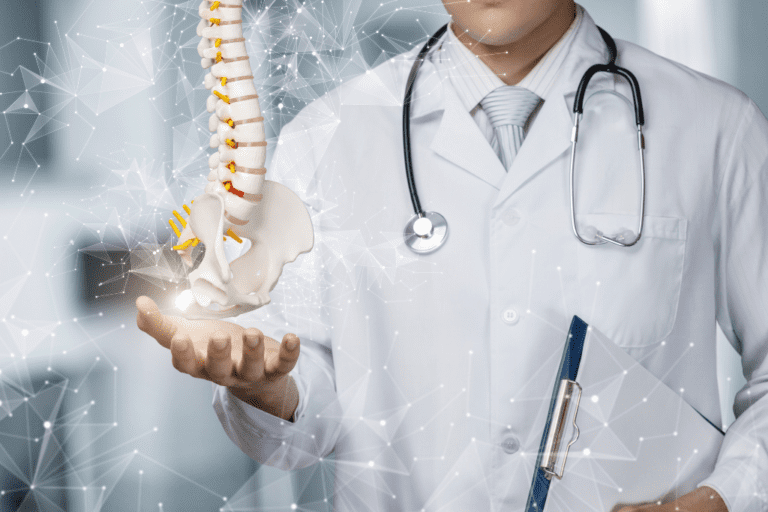
Sciatica is caused by an injury or irritation of the sciatic nerve, which originates in the gluteal region. The sciatic nerve is the longest and thickest nerve in the body, almost finger width thick. Three of these originate from the final section of the spine called the sacrum, whereas two come from the lower back region.
Essentially, two sciatic nerves are composed of five nerve roots. Each sciatic nerve runs through one hip, one buttock, and one leg, ending just below the knee on the opposite side of the body. There are other branching nerves of the sciatic nerve that continue down your leg and into your feet and toes.
It is rare for the sciatic nerve to actually become damaged, which causes the term sciatica to be used to describe any pain originating in the lower back and radiating down the leg. A common cause of this pain is an injury to a nerve, such as an irritation, inflammation, pinching, or compression.
When you suffer from sciatica, you experience mild to severe pain along the path of the sciatic nerve – from your lower back, down your hips, buttocks, and into your legs. It can also lead to leg weakness, numbness, and tingling pins and needles in your extremities.
What Does Sciatica Pain Feel Like?
Depending on its cause, sciatica pain is described in different ways. Sharp, shooting or jolting pain is described by some people. Other people describe it as “burning,” “electric” or “stabbing” pain. You may experience constant pain or intermittent pain.
It is also more common for the pain to be worse in your leg than your lower back. When you stand up or twist your upper body, the pain may seem worse. It can also be worse if you sit or stand for a long period of time. Pain can also be exacerbated by a forced and sudden body movement, like coughing or sneezing.
Common Causes Of Sciatica Include
Herniated Disc in the Lower Back
A herniated disc in the lumbar region is believed to cause up to 90% of sciatica cases. Herniated discs usually compress one or more spinal nerve roots that make up the sciatic nerve. Herniated discs in the lumbar spine can cause sciatica in two ways:
Direct Compression
A lumbar disc bulge can compress the sciatic nerve directly, or the inner soft material of the disc can leak out or herniate through the fibrous outer core (non-contained disc disorder) and press directly against the nerve.
Chemical Inflammation
In the area around the sciatic nerve, an acidic chemical irritant from the disc material (hyaluronan) can cause inflammation and irritation.
Symptoms of sciatica may occur in one leg if one disk is compressed onto the sciatic nerve (one-sided sciatica), or in both legs if both discs are compressed (bilateral sciatica). Herniated discs from adjacent segments can also cause bilateral sciatica, although this is rare.
Degeneration
The sciatic nerve can be compressed or irritated by degenerative tissues in the lumbar spine. Degenerative joint disease can also increase the bulk of synovial tissue within a joint capsule. Vertebral bone degeneration may lead to bone spurs and osteophytes (abnormal bone growths). Bulky lumbar tissues can press on one or more nerve roots of the sciatic nerve. Inflammatory proteins are secreted by degenerated intervertebral discs, causing sciatic nerve inflammation.
Lumbar Spinal Stenosis
Researchers suggest that lateral recess stenosis is common in causing sciatica in elderly individuals. Spinal stenosis narrows the spinal canal and is quite common in adults over the age of 60.
Spondylolisthesis
A small stress fracture causes vertebral bodies to slip forward on each other, causing spondylolisthesis. In addition to disc space collapse, vertebral body fracture, and forward slippage, sciatica can also result from nerve compression. Spondylolisthesis often leads to bilateral sciatica in young adults.
Physical stress injuries or trauma may lead to these conditions over time or spontaneously. A direct injury to the sciatic nerve may occur as a result of automobile accidents, sports injuries, or falls. Physical stress injuries, like weightlifting, can result in conditions such as spondylolisthesis and herniated discs.
Less Common Causes of Sciatic Pain in Florida
Below are a few lesser-known causes of sciatic pain in Florida:
- The growth of uterine tissue outside of the uterus, called endometriosis, may accumulate around or inside the sciatic nerve
- A spinal infection that forms an abscess and presses on the sciatic nerve or damages the nerve itself
- Diabetic nerve damage
- Pregnancy-induced nerve compression caused by a fetus shifting or growing
- Side effects from medications
Risk Factors of Sciatic Pain in Florida
Sciatica is caused by a variety of factors, including:
Age
Mostly, sciatica is caused by changes in the spine due to aging
Obesity
Weight gain can contribute to sciatica by increasing the stress on your spine.
Occupation
Jobs that require you to twist your back, carry heavy loads, or drive a motor vehicle for long periods of time may contribute to sciatica, but no conclusive evidence has been found.
Prolonged Sitting
The risk of developing sciatica is higher for those who are sedentary or sit for long periods of time.
Smoke
Nicotine in tobacco damages spinal tissues, weakens bones, and speeds up vertebral disc degeneration.
What Can You Do To Prevent Sciatic Pain in Your Lower Back?
Sciatica cannot always be prevented, and the condition may recur. However protecting your back can be achieved by implementing the following:
Engage in Regular Exercise
Maintain a strong back by focusing on your core muscles, the muscles in your abdomen and lower back that are responsible for proper posture and alignment. Consult your doctor for recommendations.
Sit with Good Posture
A swivel seat with good lower back support, armrests, and a swivel base is ideal. In order to maintain your back’s natural curve, consider placing a pillow or rolled towel in the small of your back. Your knees and hips should be level.
Maintain Proper Body Mechanics
Whenever you stand for a long period of time, rest one foot on a stool or small box. If you lift heavy objects, let your legs do the work. Keep your back straight and bend at your knees. Carry the load closely to your body. Avoid lifting and twisting at the same time. If the object is awkward or heavy, find a partner to help you lift it.
Treatment Options for Sciatic Pain in Florida
Your doctor may suggest these treatments if self-care measures do not relieve your pain:
Medications
There are a variety of medications that can be prescribed for sciatica pain, including anti-inflammatories, muscle relaxants, narcotics, tricyclic antidepressants, anti-seizure medications.
Physical Therapy
Your doctor or physical therapist can develop a rehabilitation program to help you prevent future injuries once your acute pain is gone. Your posture will be corrected, the muscles supporting your back will be strengthened, and your flexibility will be enhanced.
Steroid Injections
Your doctor may recommend injecting a corticosteroid medication into the area around the involved nerve root in some cases. An anti-inflammatory effect of corticosteroids reduces pain around an irritated nerve. These effects usually last for a few months. Having too many steroid injections increases the risk of serious side effects. Thus, the number of injections is limited.
Surgery
A compressed nerve can cause severe weakness, loss of bowel or bladder control, or progressively worsening or intractable pain that does not improve with other treatment options. Pinched nerves can be treated by removing bone spurs or herniated disks causing the pressure.
Alternative Treatments for Sciatic Pain
There are a variety of alternative therapies that can be used to treat low back pain, including:
Acupuncture
When you get acupuncture, a practitioner inserts hair-thin needles into specific points of your body. The acupuncture treatment for back pain has been found to be effective in some studies, but it hasn’t been found to be effective in others. Choose a licensed practitioner who has undergone extensive training if you decide to try acupuncture.
Chiropractic
Chiropractic adjustments (manipulations) are one of the methods chiropractors use to treat restrictions in spinal mobility. In order to improve function and decrease pain, spinal movement is restored. Despite its effectiveness and safety, spinal manipulation does not seem to be appropriate for patients with radiating pain.

