
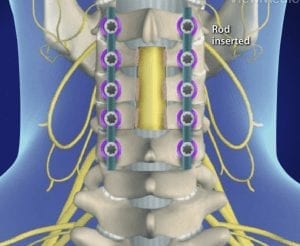
What does a Laminectomy look like
The laminectomy procedure removes the lamina which reduces irritation of the spinal nerves.
Further Information : What is Laminectomy Surgery?
A laminectomy, often referred to as “decompression surgery,” involves the removal of the back part of the vertebra called the lamina. This removal creates more space within the spinal canal, thereby relieving pressure on the spinal cord or nerves.
Indications:
- Spinal stenosis
- Herniated disc (in certain cases)
- Presence of tumors or cysts within the spinal canal
- Chronic inflammation of the spine
Procedure:
- Preparation: The patient is generally administered general anesthesia, ensuring they’re unconscious and pain-free throughout the procedure.
- Incision: Once the patient is prepared, the surgeon makes an incision over the affected vertebrae.
- Exposure: The muscles surrounding the spine are carefully pushed aside to expose the lamina.
- Removal: The surgeon then removes the lamina, creating more space in the spinal canal.
- Additional Procedures: Depending on the patient’s condition, other procedures such as a discectomy (removal of a herniated disc) or spinal fusion (joining two vertebrae together) may be performed at the same time.
- Closure: Once the procedure is completed, the incision is stitched closed.
Post-operative Care:
- Most patients are mobile within a day of the surgery.
- Physical therapy is often recommended to improve spine strength and flexibility.
- Temporary pain or discomfort at the incision site is common and managed with medications.
- Patients are usually advised to avoid heavy lifting and strenuous activities for several weeks.
Benefits:
- Significant pain relief, especially in the legs.
- Increased mobility and daily activity function.
- Improved quality of life.
Risks and Complications: As with any surgery, laminectomy has its risks, including:
- Infection
- Bleeding
- Blood clots
- Nerve injury
- Anesthesia complications
- Instability of the spine, which might require further surgery
Recovery:
- Recovery varies among patients. Some feel immediate relief, while others might take weeks to months to fully recover.
- It’s important to follow post-operative care instructions and attend follow-up appointments to ensure proper healing and monitor for potential complications.
In conclusion, a laminectomy is a well-established surgical procedure that can bring significant relief to those suffering from spinal stenosis or other spinal issues. As with any medical intervention, the decision to undergo a laminectomy should be based on a thorough discussion between the patient and their healthcare provider, considering the potential risks and benefits.