
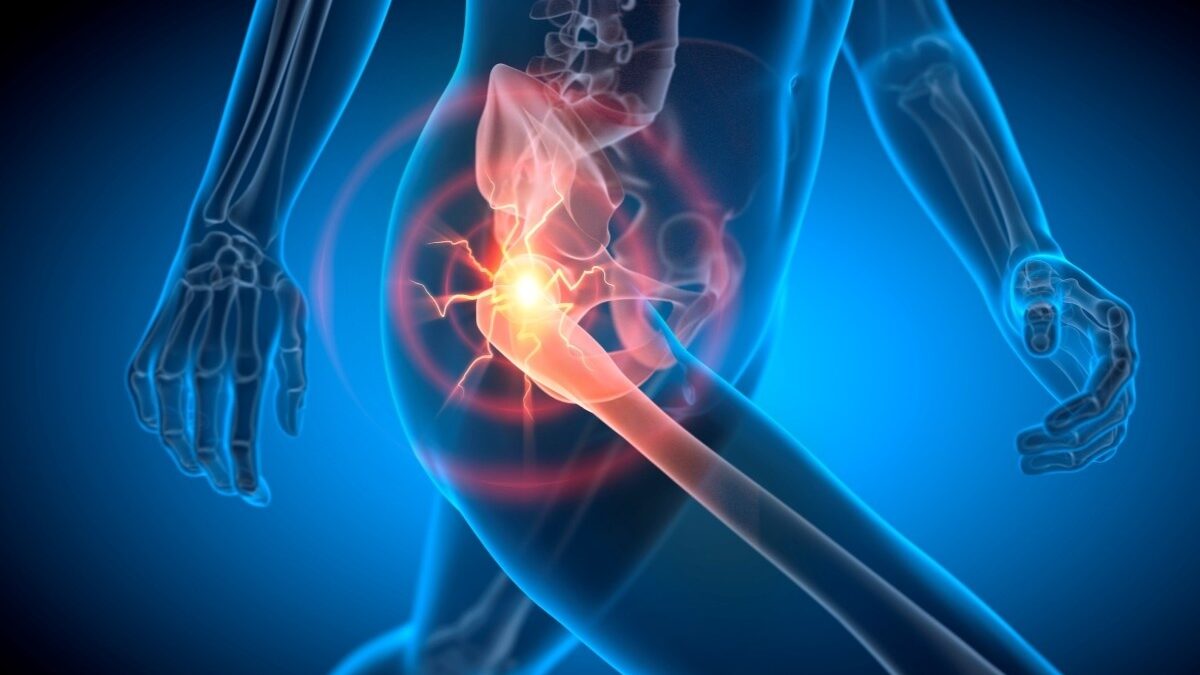
The hip is a deep, weight-bearing ball-and-socket joint that plays a role in nearly every movement you make on your feet. Because of the stress it handles daily, it’s also a common source of pain, and that pain can show up in ways you might not expect.
Hip pain may show up in the groin, outer hip, buttock, or even down the thigh, depending on the cause. Knowing the basics can help you decide when simple rest is enough, and when it’s time to seek care.
Hip pain location often reveals cause
One of the first things a doctor will ask about hip pain is where, exactly, it hurts. That’s because the location often points toward the cause.
Pain deep in the groin, for example, commonly involves the hip joint itself. Think arthritis, a labral tear (the labrum is a ring of cartilage that lines the rim of the hip socket), or impingement, which occurs when the bones of the hip joint don’t fit together smoothly. Pain along the outer hip is more often linked to bursitis or irritated tendons. And if your pain starts in the buttock and travels down your leg with tingling or numbness, the culprit may actually be your lower back, not your hip at all.
Sensations of stiffness, clicking, catching, or a feeling that the hip just isn’t moving right can also accompany hip pain and provide further clues to the origins of the pain.
Common causes of hip pain
Hip pain generally falls into a few categories: problems inside the joint, soft tissue issues around the hip, and pain that’s being transferred from elsewhere (usually the spine). Here are some of the most common culprits.
Osteoarthritis
This is one of the most frequent causes of chronic hip pain, especially as you get older. When the cartilage cushioning your hip joint wears down over time, the joint gets stiff and painful. You will probably notice it most when walking, climbing stairs, or after sitting for a while. Getting in and out of a car or putting on your shoes can start to feel like a chore.
Bursitis and lateral hip pain
If the outside of your hip is tender, especially when you lie on that side at night, it could be bursitis or irritation of the tendons that stabilize your hip. Walking longer distances or climbing stairs tends to make it worse. Some people may feel this pain radiate down the outer thigh, though that doesn’t necessarily mean a nerve is involved.
Labral tears and impingement
The labrum is a ring of cartilage that helps keep the hip joint stable. Activity from sports, repetitive movement, or gradual wear can cause this cartilage to tear. You might notice a deep groin pain, along with clicking, catching, or a sharp pinch when you pivot or squat. Labral tears often go hand in hand with femoroacetabular impingement (FAI), a condition where the bones of the hip don’t fit together quite right, causing friction over time. When conservative treatment isn’t enough, hip arthroscopy may be recommended to address the damage.
Muscle strains and tendon irritation
Not all hip pain originates in the joint. Hip flexor strains, hamstring issues, and gluteal tendon problems can all cause pain around the hip area, especially after overuse or a sudden jump in activity. This type of pain is usually more localized and tends to flare with specific movements.
“Is it my hip, or my back?”
This is one of the most common questions, and one of the hardest to answer on your own. Lower back problems can send pain into the buttock, hip, and thigh in a way that feels a lot like a hip problem.
A few general clues: hip joint pain tends to start deep in the groin and gets worse when you rotate the hip or get in and out of a car. Spine-related pain is more likely to travel down the leg and may come with numbness, tingling, or weakness—symptoms often associated with sciatica. But plenty of people deal with both at the same time, which is why a thorough evaluation will help guide diagnosis and treatment.
When to get help for hip pain
Most hip pain isn’t an emergency. But there are times when you shouldn’t wait to be seen.
It’s a good idea to seek medical attention if you’re experiencing any of the following:
- You can’t put weight on the leg, or the pain began suddenly after a fall
- You notice fever, redness, or warmth around the hip
- Pain is rapidly worsening and doesn’t improve with rest
- You’re dealing with new numbness, weakness, or balance issues
- Pain is consistently worse at night or is paired with unexplained weight loss
Even outside of those red flags, hip pain that’s limiting your mobility, disrupting your sleep, or not improving after a few weeks of rest and over-the-counter care deserves a closer look.
What treatment usually looks like
The good news is that most hip pain doesn’t require surgery. Treatment usually starts with small steps: modifying the activities that aggravate it, using ice or heat, and taking anti-inflammatory medication if appropriate. Physical therapy is one of the most effective tools, helping strengthen the muscles around the hip, improve the mechanics, and reduce stress on the joint.
If those steps aren’t enough, injections can help reduce inflammation and, in some cases, help your doctor confirm exactly where the pain is coming from. For conditions like advanced arthritis, labral tears, or impingement that don’t respond to conservative care, surgical options—from minimally invasive hip arthroscopy to hip replacement—may be worth discussing with an orthopedic specialist.
The key is getting a proper diagnosis first. When you know what’s driving the pain, the path forward becomes much clearer.
Don’t let hip pain slow you down
Hip pain is common, but that doesn’t mean you have to live with it. Whether it turns out to be arthritis, bursitis, a soft tissue issue, or even something coming from your back, identifying the source is the first step toward feeling better. If hip pain is keeping you from the things you enjoy, schedule a consultation with a specialist who can help figure out what’s going on and what to do about it.