
Have Chronic lower back pain, you are among nearly 30 million people in the United States that deal with this issue on a daily basis, and there are nearly 900,000 new cases of lower back pain each year. It is said that nearly 80% of patients suffer to find pain relief with the common treatments available to them. One cause of lower back pain is a small crack or break in the body of the vertebra. Back injury, genetic makeup and many other factors can also cause deterioration of the spin, this places a lot of stress on the body of the vertebra and the area that transmits pain. In the last 6 months have you tried Conservative care management like Physical therapy, medications and injections and have they not worked for your chronic lower back pain? You may be a candidate that qualifies for The Intercept procedure.
The Intracept Procedure
The intercept procedure is a surgery that has over two decades of scientific research on the body of the nerve and its role in pertaining to lower back pain. This procedure is done by using a small incision sight and a few stitches. After the small incision tiny instruments are inserted though the openings to perform the surgery. This type of surgery is used to cause less pain, scaring and damage to your healthy tissue inside the vertebra. The Intercept procedure targets the body of the vertebra, which is one of the many bones that surrounds and protect your spine/ spinal cord. They will then target the body of the vertebra by using an X-ray guidance tool that guides the radiofrequency probe into the base of the vertebra to relive the acute or chronic pain that is taking place in your lower back regions. This procedure has proven long term relief of chronic lower back pain.
Key Benefits
There are many key benefits of The Intercept procedure, this treatment provides an option to patients who have not responded to non-surgical treatment options. The treatment is done using a small incision and is an Outpatient surgical procedure where you get to go home the same day that it is performed, this means that the recovery period is pretty rapid and, in some cases, just a few days. This treatment is completely implant free and maintains the existing state/ structure of the spine. There will be no restrictions placed on the patient after the procedure, and the last key element of Intercept provides durable relief. This targets the acute and chronic pain that is taking place in the lower back, and in many instances the pain relief is almost immediate.
Steps for the Intracept Procedure
- The first step is to access the pedicle- a cylinder shaped section of hard bone that sticks out the back part of the vertebra, providing protection to the spinal cord.
Under the guidance of a type of medical imaging that shows a continues X-ray on a monitor a short plastic tube is able to be inserted and advanced though the bone on the back side of the vertebra.
- Step two a channel is created.
In this process a curved cannula is used. This is a hollowed-out tube with a sharp rectangular inner core that can be inserted into the vertebra is utilized to create a channel that reaches the base, to the body of the vertebra. - Step three a radiofrequency probe is placed.
The radiofrequency probe is placed into the curved channel that has been created and reached the base of the vertebra. This probe allows a radio wave that produces an electrical current. - Step four is the remove process of the body to the vertebra.
The radiofrequency probe that has been inserted into the spine is then used to generate an electric current that uses heat to stop the transmission of pain coming from the nerve in the base in the vertebra. They are able to burn the nerve that is causing the pain and essentially element the pain transmitters in the nerve that is causing the lower back to have chronic pain.


Who is a candidate for The Intracept Procedure?
- If you have been struggling with lower back pain for more than six months and have not responded to any of the non-invasive care treatments than this could be the right procedure for you. To take steps further to make sure this is the right procedure for you there will be an MRI that takes place to check if there is swelling occurring in the bone marrow. This swelling and inflammation can cause damage to the living tissue, this would be the nerves inside the vertebra that this surgery is correcting. During the MRI they also look to see if the normal red blood cell components in the bone marrow have started to/ and or have transformed into a yellow fatty marrow. They will particular be looking for theses change in your L3 through your S1 vertebra’s. the L3 thought the S1 vertebra are made up of the lumbar, and the lower back portions of your spine.
Success of the Intracept Procedure
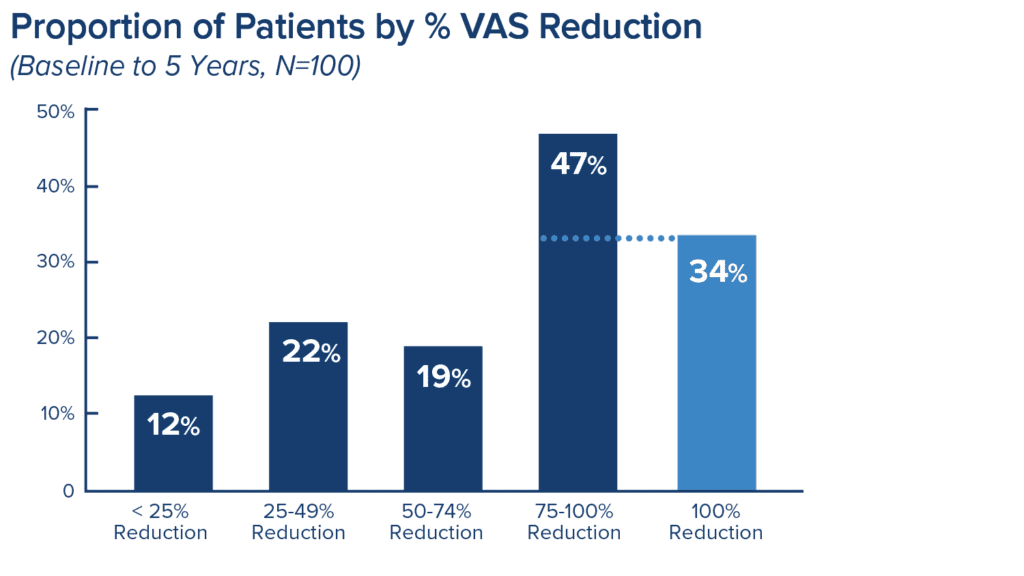
There has been a lot of data taken to not only show how The Intercept procedure can have immediate effects but also the long-term effects to the improvement of patient’s lower back pain. Generally, patients have been overwhelming positive about the turn out of this procedure and were able to get back to daily activities within a few days with little or no pain. There has even been a study done with patients five years after they had The Intercept Procedure, there was a high level of satisfaction from the patients not only directly after the procedure, but years later when they were still having benefits from the surgery. 79% of patients indicated that they would partake in this procedure again if they were to have the same condition happen again. More than half had resumed a level of activity that they had enjoyed before there lower back pain even stated taking place. After the procedure there was a low rate of patients actively using opioid and or injections to improve their lower back pain. This procedure has filled a very large gap in the treatment process for patients with chronic lower back pain.


The “Carson Daly” Procedure
Yes, this is the procedure that Carson Daly from the today show did to relieve his back pain symptoms by 70%. Carson suffered a T12 back fracture when he was 24 years old from a snowmobile accident. He has tried everything in order to try to help his back pain, for over 25 years he has tried physical therapy, yoga, mediation, and everything else possible.
This procedure has been able to help Carson live his life in a better way. The pain reduction allows him to perform more daily tasks and play with his children. The incisions are extremely small and this is considered a minimally invasive procedure.