Everything changes if you’re trying to push through the pain caused by a herniated disc. Sleeping becomes a real challenge and the simplest of physical activities can leave you feeling broken. It’s enough to make anyone feel desperate for immediate relief, but should you consider surgery for your herniated disc?

As you get older, it’s natural for your spinal health to slowly deteriorate. However if you want to get better, you have to seek help, otherwise the herniated disc can get worse. In this post, we’re going to review the treatment options you have and whether surgery is the right choice for your spinal condition.
What Is a Herniated Disc?
The spine is a rather remarkable component of the human anatomy. Not only does it support your back and help you stand upright, it also facilitates the transmission of signals from your body to your brain and vice-versa. The bones of the spine (vertebrae) are separated by discs. The discs act like cushions, facilitating flexibility and absorbing shock for your vertebrae. Although they are sturdy on the outside, the nucleus of each disc is soft.
When that soft, gel-like portion of your disc protrudes through a tear in the annulus and into your spinal canal, it can cause significant pain, limit mobility, and weakness, among other symptoms. This is known as a herniated disc, and there are approximately 5 to 20 cases per 1000 adults every year.
What Causes Disc Herniation?
While a herniated disc can be the result of a single significant event that results in injury (i.e., a car accident, sports injury, work-related incident), it’s more likely to be the result of normal degenerative spinal health. Your discs wear away over time, as do the ligaments holding them in place.
As the discs continue to deteriorate, your body will reach a point where even a slight strain or sudden twisting movement could cause the disc to rupture, thus allowing the soft nucleus of the disc to bulge through the annulus.
Although as many as 95% of herniated discs occur in the lower lumbar spine, you can experience multiple herniated discs all along your spine. Research suggests that your family history is a strong signal of your risk for herniated discs, too.
Herniated Disc Symptoms
When it comes to herniated discs, no two people experience the exact same symptoms. Symptoms will depend on the location of the herniated disc along the spine and the size of the herniation. While most herniated discs affect a nerve root, this isn’t always the case. When the herniated disc doesn’t make contact with a nerve, you may only experience light lower back pain.
Then again, you may not experience any pain at all. When the herniated disc does press against a nerve, you can expect pain, numbness, or weakness in the area of your body connecting to that nerve. Whether you start to experience low back pain suddenly or you have been experiencing long-term pain that comes and goes, you could be suffering from a herniated disc.
When to See a Doctor About a Herniated Disc?
When you start to experience herniated disc symptoms, you don’t want to wait to speak to a medical professional . If you experience pain for more than four weeks, you should consult a spine specialist. If you experience significant weakness in your limbs, loss of sensation in your genitals or rectal region, or the inability to control urination or bowel movements, you should seek help immediately.
If you have a history of metastatic cancer or have recently succumbed to an infection, and you are experiencing symptoms of a herniated disc, you should also consider seeking immediate medical attention to start your treatment.
Common testing modalities for a herniated disc include:
Computed Tomography Scan (CT/CAT scan): creates a diagnostic image by reading X-rays that detail the shape and size of your spinal canal. It can also be used to examine the various structures of your spine.
Electromyogram and Nerve Conduction Studies (EMG/NCS): measures the electrical impulse along your nerve roots, peripheral nerves, and muscle tissues, indicting whether or not you are suffering from nerve damage. This is one of the least common testing methods for a herniated disc.
Magnetic Resonance Imaging (MRI): recreates the structures of the body as 3-D images. This is accomplished with the use of powerful magnets and computers that can create highly detailed renderings of the spinal cord, nerve roots, and the surrounding area.
Myelogram: involves an injection of a contrast material into the cerebrospinal fluid. Then, an X-ray is used to gauge areas of pressure on the spinal cord or nerves. In other words, it locates areas showing signs of herniation.
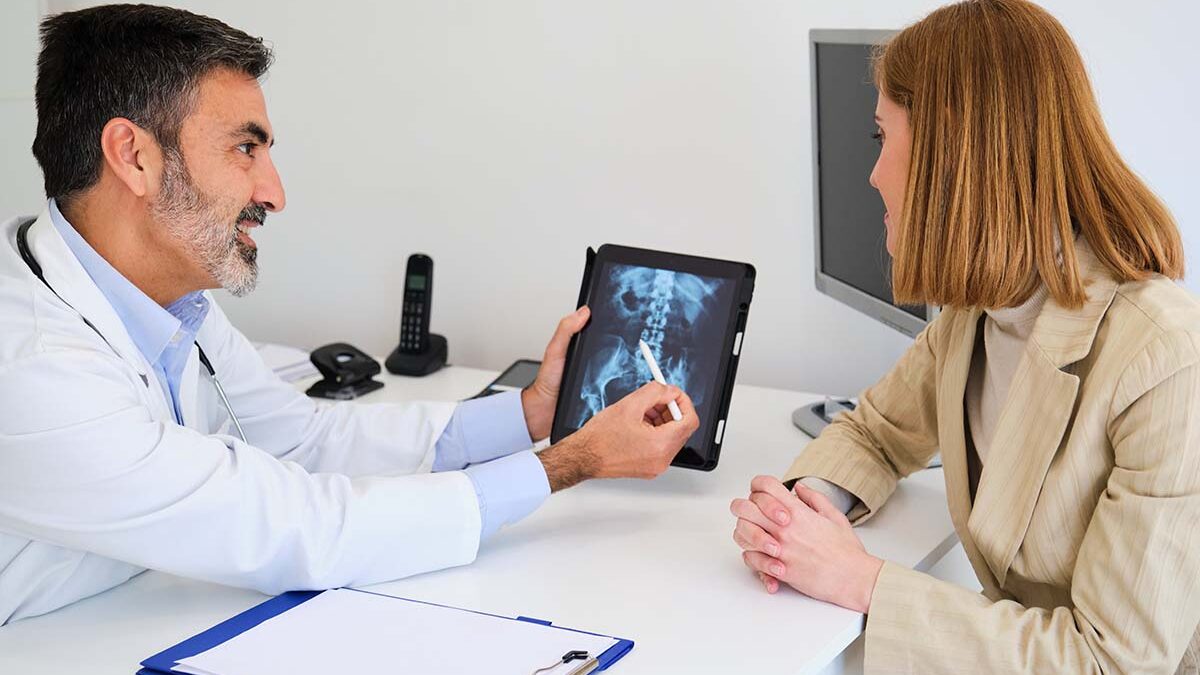
X-Ray: utilizes radiation to create an image of the spine. This image can be used to search for signs of spinal damage and sources of pain, including herniated discs.
Non-Invasive Treatment Options For Herniated Discs
Once you have been diagnosed with a herniated disc, your medical provider can discuss your next steps. There are many non-invasive treatment options for individuals suffering from a herniated disc, allowing many to overcome their pain with minimal pain and lifestyle obstruction. Sometimes, all it takes to reduce your pain is the willingness to give your body time to heal. Taking it easy for a few days or weeks can work wonders, especially for your inflammation.
Nonsteroidal anti-inflammatory medication can also help treat a herniated disc. This is particularly true when the pain from the herniated disc is minimal. Conversely, an epidural steroid injection aided by X-ray guidance can attack your pain at the source, providing substantial relief for most patients.
Another popular non-invasive treatment is physical therapy. This is normally paired with one or more treatment options to maximize results. Therapy comes in many forms, including pelvic traction, gentle massage, ice and heat therapy, ultrasound, electrical muscle stimulation, and various stretching exercises. Lastly, pain medication and muscle relaxants can provide relief for those with a herniated disc, especially when combined with physical therapy.
When Is Surgery Recommended For a Herniated Disc?
Of course, not all herniated discs can be treated with non-surgical methods. Surgery may be recommended non-invasive options prove fruitless in curing your symptoms. When discussing surgery with your medical provider, don’t be afraid to ask a lot of questions. The last thing you want is to feel uncertain when entering the surgery room. Depending on your age, overall health, and medical history, the types of surgery recommended will differ. Common candidates for herniated disc surgery include those with pain that negatively affects quality of life, weakness or numbness in the limbs, loss of bowel and bladder control, or difficulty standing or walking. Generally, if you are in good health and non-invasive methods aren’t working for you, your medical provider will consider surgery to relieve your symptoms.
Types of Surgery for Herniated Disc
Surgery can be used to help relieve pressure on the nerves being affected by your herniated disc. Lumbar spine surgery (lumbar laminectomy) is typically used to relieve leg pain and sciatica resulting from a herniated disc. Using a small incision to access the herniated disc, the surgeon removes the damaged disc (discectomy) and stabilizes the spine, usually by performing spinal fusion.
Artificial disc surgery can also be used to treat a herniated disc in the lumbar region of the spine by making a small incision along the abdomen and removing the damaged disc with an artificial replicant. This surgery is only used when the patient has a damaged disc between L4 and L5 or L5 and S1 and has continued to suffer for six months straight despite treatment.
Herniated discs in the neck can be treated with cervical spine surgery. This type of surgery works similarly to those mentioned above, except the initial incision is made through the front or back of the neck (depending on the location of the herniated disc). Minimally invasive spine surgery, which uses multiple smaller incisions, can also be used to decrease hospitalization times and improve patient outcomes